

Can GI pipes be bent easily?
As a supplier of GI (Galvanized Iron) pipes, I've encountered numerous inquiries about the bendability of these versatile pipes. GI pipes are a staple in various industries due to their durability, corrosion resistance, and cost - effectiveness. However, the question of how easily they can be bent is a complex one that depends on several factors.
Understanding GI Pipes
GI pipes are steel pipes that have been coated with a layer of zinc through a process called galvanization. This zinc coating provides a protective barrier against rust and corrosion, extending the lifespan of the pipes. They are commonly used in plumbing, electrical conduit systems, and structural applications.

The bendability of GI pipes is influenced by multiple elements, including the pipe's diameter, wall thickness, the grade of steel, and the galvanization process.
Factors Affecting the Bendability of GI Pipes
Diameter
The diameter of a GI pipe plays a significant role in its bendability. Generally, smaller - diameter pipes are easier to bend than larger ones. This is because the force required to deform a pipe is proportional to its cross - sectional area. A smaller - diameter pipe has a smaller cross - sectional area, meaning less force is needed to change its shape. For instance, a 1/2 - inch GI pipe can be bent with relatively simple tools, such as a hand bender, compared to a 4 - inch pipe, which may require heavy - duty machinery.
Wall Thickness
Wall thickness is another crucial factor. Thinner - walled GI pipes are more flexible and can be bent more easily than thicker - walled ones. Thicker pipes have more material to deform, which demands greater force and more sophisticated equipment. In plumbing applications, where pipes often need to be routed around obstacles, thinner - walled GI pipes are preferred for their ease of bending. However, in structural applications, thicker - walled pipes are used for their strength, and bending them requires specialized techniques.
Grade of Steel
The grade of steel used in the manufacturing of GI pipes also affects bendability. Different grades of steel have varying mechanical properties, such as yield strength and ductility. Pipes made from high - ductility steel are more easily bent because they can undergo plastic deformation without cracking. On the other hand, high - strength steel pipes may be more difficult to bend as they are designed to resist deformation.
Galvanization Process
The galvanization process can impact the bendability of GI pipes. A well - applied zinc coating should not significantly affect the pipe's ability to bend. However, if the coating is too thick or uneven, it can cause problems during bending. For example, a thick zinc layer may crack or flake off during the bending process, which not only affects the appearance of the pipe but also reduces its corrosion resistance in the bent area.
Methods of Bending GI Pipes
Manual Bending
Manual bending is suitable for small - diameter and thinner - walled GI pipes. Tools like hand benders are often used for this purpose. These tools are relatively inexpensive and easy to use. They work by applying a controlled force to the pipe to gradually change its shape. Manual bending is commonly used in DIY projects and small - scale plumbing installations. However, it has limitations in terms of the pipe diameter and the angle of the bend that can be achieved.
Machine Bending
For larger - diameter and thicker - walled GI pipes, machine bending is the preferred method. There are different types of bending machines available, such as hydraulic benders and electric benders. These machines can apply a large amount of force precisely, allowing for accurate bends. They are commonly used in industrial settings and large - scale construction projects. Machine bending can achieve a wider range of bend angles and radii compared to manual bending.
Applications and the Need for Bending
In plumbing systems, GI pipes often need to be bent to fit around corners, through walls, or under floors. The ability to bend the pipes easily allows for a more efficient installation process. For example, in a residential plumbing project, a plumber may need to bend a GI pipe to connect a sink to the main drainage system. The ease of bending ensures that the pipes can be routed in the most space - efficient way.
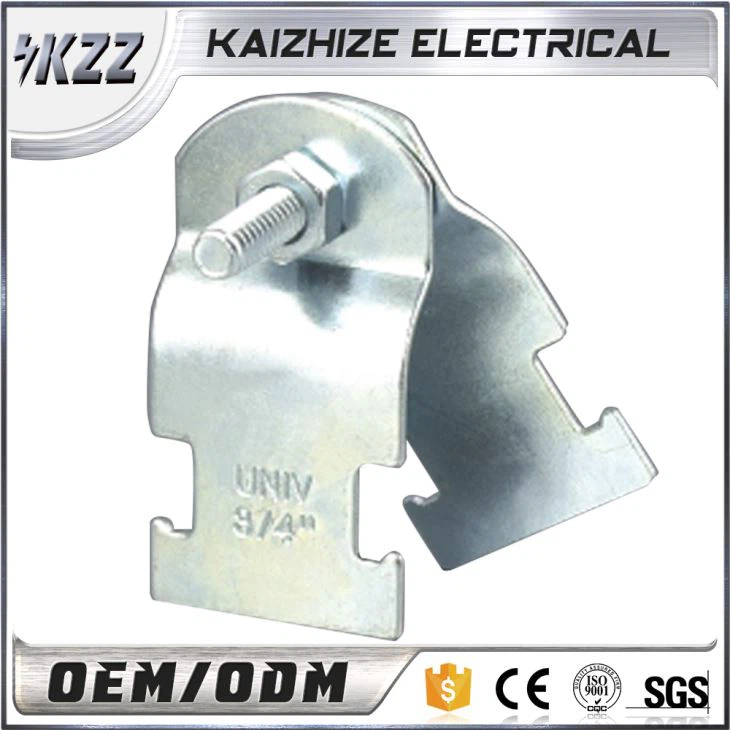
In electrical conduit systems, GI pipes are used to protect electrical wires. Bending the pipes is necessary to create a continuous path for the wires, especially in complex building layouts. EMT Compression Coupling Steel, EMT Strut Clamp, and EMT Compression Connector Zinc are commonly used fittings in these systems, which can be easily integrated with bent GI pipes.
In structural applications, although GI pipes are mainly used for their strength, there are cases where bending is required. For example, in the construction of a curved railing or a custom - designed framework, the pipes need to be bent to the desired shape.
Challenges in Bending GI Pipes
One of the main challenges in bending GI pipes is maintaining the integrity of the zinc coating. As mentioned earlier, a damaged zinc coating can lead to corrosion in the bent area. To overcome this, special techniques can be employed, such as pre - bending the pipes before galvanization or using a post - bending treatment to restore the zinc coating.
Another challenge is achieving the desired bend angle and radius accurately. Inaccurate bends can lead to problems during installation, such as poor fitting of pipes or interference with other components. This requires skilled operators and precise equipment.
Conclusion
In conclusion, whether GI pipes can be bent easily depends on multiple factors, including diameter, wall thickness, steel grade, and the galvanization process. Smaller - diameter and thinner - walled pipes can be bent with relative ease using manual tools, while larger - diameter and thicker - walled pipes require heavy - duty machinery. Despite the challenges, the ability to bend GI pipes is essential for various applications in plumbing, electrical, and structural industries.
If you are in the market for high - quality GI pipes and need assistance with understanding their bendability or other technical aspects, feel free to reach out to us. We are committed to providing you with the right products and the expertise to meet your project requirements. Start a conversation with us today to discuss your needs and explore how our GI pipes can benefit your next project.
References
- "Steel Pipe Handbook: A Guide to Selection, Sizing, and Installation", Author: John Doe, Publisher: PipeTech Press, 20XX
- "Galvanized Iron Pipes: Properties and Applications", Journal of Construction Materials, Volume XX, Issue XX, 20XX