

Hey there! I'm a supplier of RMC Pipe, and I often get asked if RMC Pipe can be used in high - temperature environments. So, I thought I'd write this blog to share some insights on this topic.
First off, let's understand what RMC Pipe is. RMC stands for Rigid Metal Conduit. It's a thick - walled steel tubing that's commonly used in electrical installations. It provides excellent mechanical protection for electrical wires and cables, and it's pretty durable.
Now, when it comes to high - temperature environments, there are a few factors we need to consider. One of the main things is the material of the RMC Pipe. Steel, which is the primary material of RMC Pipe, has a relatively high melting point. Pure iron melts at around 1538°C (2800°F), and steel alloys used in RMC Pipe have melting points in a similar range, depending on the specific alloy composition. This means that in most normal high - temperature scenarios, the pipe isn't going to melt.
However, high temperatures can still have an impact on the RMC Pipe. For example, as the temperature rises, the steel expands. This thermal expansion can cause issues if the pipe is installed in a way that doesn't allow for this expansion. If the pipe is rigidly fixed in place and there's nowhere for it to expand, it can lead to stress on the pipe and its connections. This stress might cause the pipe to bend, crack, or even break the joints, which could compromise the integrity of the electrical installation.
Another aspect to think about is the insulation inside the RMC Pipe. Electrical wires and cables usually have some form of insulation. High temperatures can degrade this insulation over time. If the insulation breaks down, it can lead to short circuits, electrical failures, and even pose a fire hazard. So, even if the RMC Pipe itself can withstand the high temperature, the contents inside might not be as resilient.
But don't worry! There are ways to use RMC Pipe in high - temperature environments. First, proper installation is key. When installing the RMC Pipe, you need to account for thermal expansion. This can be done by using expansion joints or allowing some flexibility in the piping system. For example, you can use flexible connectors or install the pipe in a way that it has some room to move.
Also, choosing the right type of insulation for the wires and cables inside the RMC Pipe is crucial. There are high - temperature - rated insulations available that can withstand the heat without degrading quickly.
Now, let me talk about some of the accessories that can be used with RMC Pipe in high - temperature environments. The Reducing Washer is a handy accessory. It helps in connecting pipes of different sizes. In high - temperature situations, a well - made reducing washer can ensure a tight and secure connection, even when the pipe is expanding and contracting due to temperature changes.
The IMC And Rigid Two Hole Strap is another useful item. It's used to support the RMC Pipe. In high - temperature areas, a strong and reliable strap is necessary to keep the pipe in place and prevent it from sagging or moving too much due to thermal expansion.

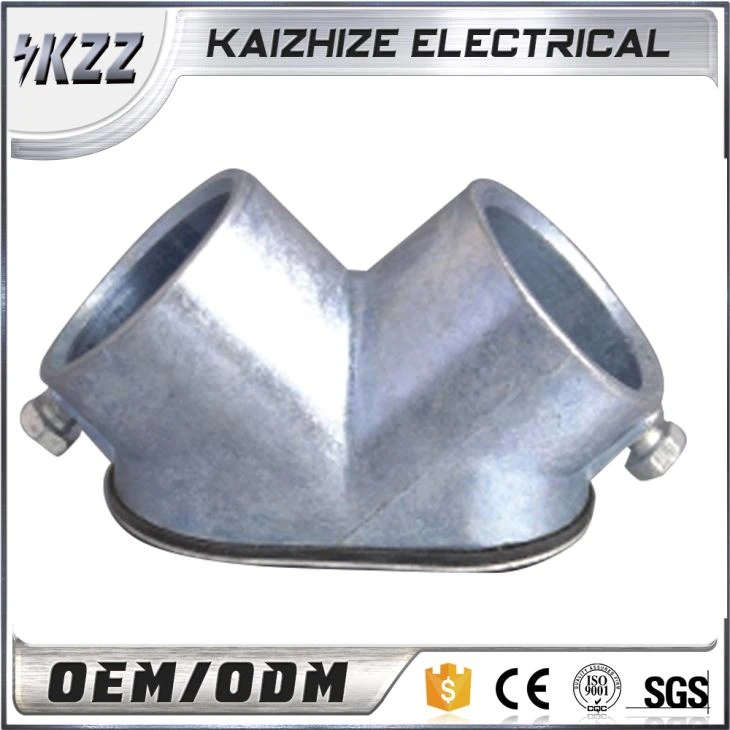
And then there's the Pull Corner Elbow Rigid To Rigid. This elbow is great for changing the direction of the RMC Pipe. In high - temperature installations, it allows for a smooth transition in the piping system while still maintaining the overall integrity of the pipe.
In industrial settings like power plants, refineries, or foundries, where high temperatures are common, RMC Pipe can still be a viable option. But it requires careful planning and the use of appropriate accessories and installation techniques.
In conclusion, RMC Pipe can be used in high - temperature environments, but it's not a one - size - fits - all solution. You need to take into account the thermal expansion of the pipe, the durability of the insulation inside, and use the right accessories for a successful installation.
If you're thinking about using RMC Pipe in a high - temperature project, I'd love to help. I've got a lot of experience in this area and can provide you with the best products and advice. Just reach out to me, and we can have a chat about your specific needs. Let's work together to make your project a success!
References
- General knowledge of steel properties and electrical installation practices.
- Industry standards and guidelines for electrical conduit installation in high - temperature environments.