

Hey there! As a supplier of Spring Nuts, I often get asked a bunch of questions about these little components. One question that pops up quite a bit is, "Do Spring Nuts have good electrical conductivity?" Well, let's dive right into it and find out.
First off, let's understand what Spring Nuts are. Spring Nuts are small but mighty fasteners. They're designed to be used with threaded rods and other similar fixtures. They're really handy because they can be quickly and easily installed, and they provide a secure connection. You'll find them in all sorts of applications, from industrial setups to home DIY projects.
Now, when it comes to electrical conductivity, it all boils down to the material the Spring Nuts are made of. Most Spring Nuts are made from metals like steel or stainless steel. Steel is an alloy that mainly consists of iron and carbon, with some other elements thrown in for good measure. Stainless steel, on the other hand, has a higher chromium content, which gives it better corrosion resistance.
Metals are generally good conductors of electricity. That's because they have free electrons that can move around easily. When an electric field is applied, these free electrons start to flow, creating an electric current. So, in theory, Spring Nuts made from metals should have decent electrical conductivity.
However, it's not that simple. The conductivity of a metal can be affected by a few factors. One of these factors is the purity of the metal. If the steel used to make the Spring Nuts has a lot of impurities, it can reduce the conductivity. Impurities can act as obstacles for the free electrons, making it harder for them to flow.
Another factor is the surface condition of the Spring Nuts. If the surface is oxidized or has a layer of corrosion, it can also reduce the electrical conductivity. Oxidation creates an insulating layer on the surface of the metal, which blocks the flow of electrons. So, if you're using Spring Nuts in an electrical application, it's important to make sure they're clean and free from corrosion.
Let's talk about some real - world applications. In electrical installations, Spring Nuts can be used to secure electrical components to mounting brackets. For example, in a control panel, you might use Spring Nuts to attach circuit breakers or relays. In these cases, good electrical conductivity is important to ensure proper grounding and to prevent electrical interference.
But what if you need really high - quality electrical conductivity? Well, you might want to consider using Spring Nuts made from copper or brass. Copper is an excellent conductor of electricity. It has a very high number of free electrons, which allows for efficient current flow. Brass, which is an alloy of copper and zinc, also has good electrical conductivity, although it's not as good as pure copper.
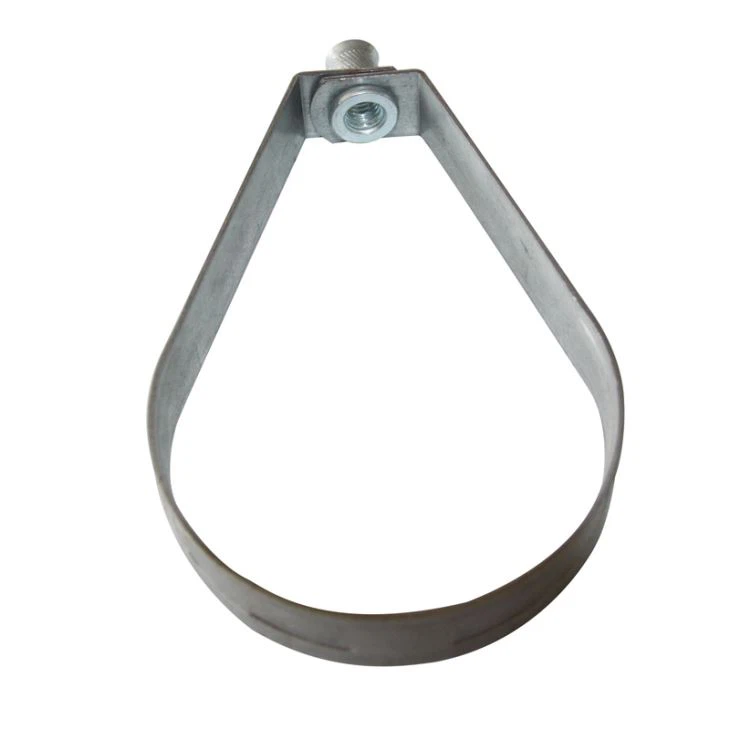
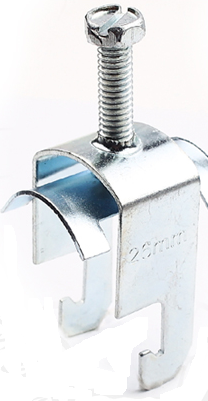
Now, let's compare Spring Nuts with some other products in our catalog. We also offer Sprinkler Clamp/Loop Hanger, Light Duty Beam Clamp, and One-piece Cable Clamp. These products are used in different applications, but like Spring Nuts, their performance can also be affected by factors like material and surface condition.
For instance, the Sprinkler Clamp/Loop Hanger is used to support sprinkler pipes. While electrical conductivity might not be a primary concern here, it's still important to ensure that the material used is strong and corrosion - resistant. The Light Duty Beam Clamp is used to attach beams to structures, and it needs to provide a secure and stable connection. And the One - piece Cable Clamp is used to hold cables in place, and it should be able to grip the cables firmly without damaging them.
In summary, Spring Nuts made from metals generally have some level of electrical conductivity. However, the actual conductivity can vary depending on factors like the purity of the metal and the surface condition. If you need high - quality electrical conductivity, you might want to consider Spring Nuts made from copper or brass.
If you're in the market for Spring Nuts or any of our other products, we'd love to hear from you. Whether you're a DIY enthusiast or a professional in the industry, we can provide you with the right products for your needs. Just reach out to us for a quote and let's start a conversation about your project. We're here to help you find the best solutions.
References:
- "Materials Science and Engineering: An Introduction" by William D. Callister Jr. and David G. Rethwisch
- "Handbook of Electrical Conductivity of Metals" by Charles Kittel